

 日本語
日本語
To thrive in the fast-paced digital market of 2026, business owners must change how they develop software. Many companies feel stuck with their current IT partners. However, you can avoid this costly trap when you build for handover from the very first day. Consequently, this strategic approach ensures that your mobile app remains an independent business asset rather than a long-term liability.
Why Modern Businesses Must Build for Handover
Vendor lock-in worries many modern leaders today. In fact, recent research from CIO Magazine (cio.com) shows that 74% of CIOs fear being locked into the wrong technology within just two years. When you do not build for handover, you slowly lose control over your own product. Therefore, you become completely dependent on a specific vendor’s team or their private code.
Initially, a development partnership might seem perfect. As a result, you might ignore the future risks of scaling. However, as your business grows, you may need to switch teams or bring development in-house. A project designed to build for handover allows for easy exits and seamless transitions. Ultimately, this protects your digital investment and reduces long-term risks.
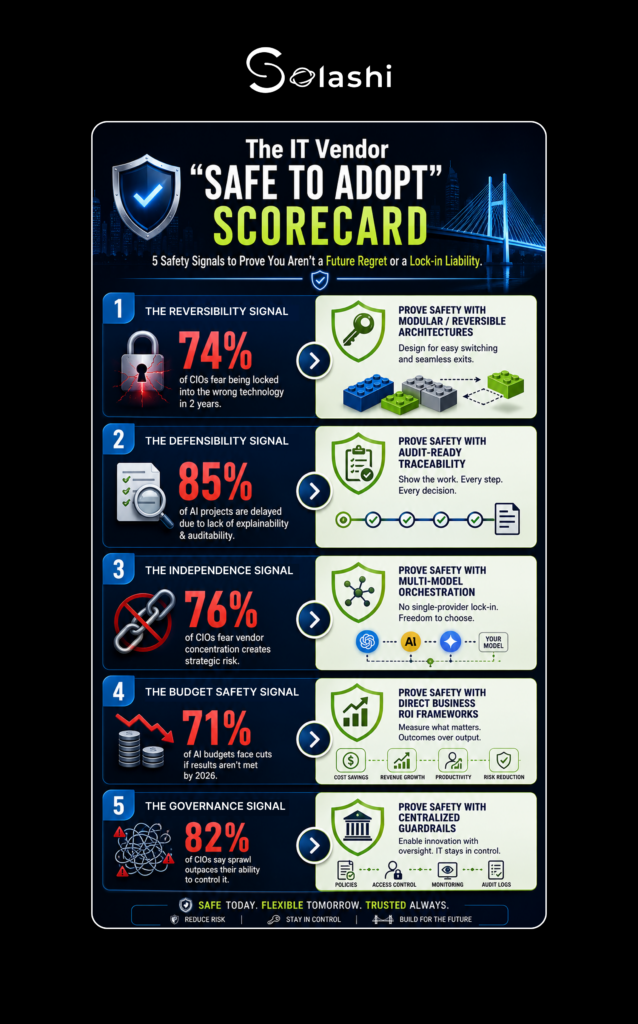
Safety Signals to Prove Your Software is Safe to Adopt
Use Modular Architecture to Ensure Reversibility and Build for Handover
The foundation of a successful transfer is simple, modular design. Specifically, you must ensure your IT vendor uses modular and reversible architectures. This approach treats different parts of your mobile app like building blocks. Consequently, you can replace one piece of the system without rebuilding everything from scratch.
Furthermore, real independence requires a flexible setup. If you want to build for handover successfully, you cannot rely on a single AI provider. Instead, you should use multi-model orchestration to switch between the best AI models easily as the market changes.
Ensure Audit-Ready Traceability for a Clean Handover
Information transparency is another vital pillar when you build for handover. In fact, studies show that 85% of AI projects face delays because they lack clear explanations. If a new team cannot understand how the previous team made decisions, the project will fail.
Therefore, your vendor must provide audit-ready traceability. They should document every technical step and business decision clearly. Specifically, this “show the work” mindset makes your app safe to adopt and easy to transfer. Then, your internal team can pick up the work immediately without any confusion.
Scale Across Multiple Platforms Seamlessly
In 2026, the industry is moving away from a “mobile-first” mindset. Instead, businesses are building multi-platform systems. Users now expect a smooth experience across web platforms, mobile apps, and connected devices.
When you build for handover, you create a unified system that connects these channels easily. As a result, you can scale these complex systems across new platforms much faster. Moreover, portable and well-documented systems save you massive amounts of launch time.
Protect Your Budget with Direct Business ROI
Designing your software for transferability also protects your bottom line. In fact, experts predict that companies will cut 71% of AI budgets if they do not deliver clear results. Messy projects that do not build for handover often lead to wasted spending and high maintenance costs.
In contrast, a clean project uses centralized guardrails to keep IT in control. Consequently, this structured approach helps you measure direct business outcomes rather than just technical output.
Follow the Build for Handover Series from Solashi’s CEO
Are you looking for more real-world examples? Our CEO, Lam Hoang, regularly shares practical insights on this exact topic. Specifically, you can follow the complete executive series directly on LinkedIn. Consequently, you will discover actionable tips on how to build for handover in complex enterprise environments.
Therefore, we highly recommend checking out the official #buildforhandover series on LinkedIn to stay updated on the latest engineering strategies.
Discover Our Visual Blueprints on Pinterest
If you want to visualize exactly how we build for handover, explore our official Pinterest boards. Specifically, you will find high-fidelity CRM layouts, modular UI design systems, and real-world enterprise dashboard blueprints.
Therefore, we invite you to follow Solashi Pinterest to discover extensive visual references. These actionable design frameworks will help you plan your next custom software project with total confidence.

Partner with Solashi to Build for Handover Today
At Solashi Holdings, we believe you should always stay in full control of your technology. Specifically, we help business owners build for handover by using clean code and safe development strategies. Our proven “Safe to Adopt” framework protects your digital assets from day one.
Therefore, your mobile app remains flexible, trusted, and ready for any future changes. Are you ready to secure your software? Then, visit our contact page to start your strategic consultation with our team.
Frequently Asked Questions About Building for Handover
What does it mean to build for handover?
To build for handover means designing your software so another development team can easily take it over. Specifically, your development partner writes clean, standardized code and documents every technical step. Consequently, you retain full ownership of your product and can change development partners without any business disruption.
Why is vendor lock-in a dangerous tech trap?
Vendor lock-in completely traps your business with a single IT provider. In fact, you lose control of your software architecture and cannot scale your app without their permission. Therefore, if you do not build for handover, you risk losing your entire financial investment if the partnership fails.
How does Solashi ensure a smooth handover process?
At Solashi Holdings, we use our proprietary “Safe to Adopt” framework to protect your software. Specifically, we design modular code, implement multi-model AI architectures, and provide audit-ready documentation from day one. Consequently, we help you build for handover so your internal team can take over the system seamlessly at any time.
Ready to start your software development process? Book a 20-minute consultation with Solashi and let us show you how we work.

